Monday, October 17, 2011

To do list: sign up for RTM

One of the apps I love and use daily is Remember the Milk. In short, it's a to-do list manager that syncs across a variety of platforms. I use it on my pc and my android phone. 

Today RTM added some nice upgrades to their software. So if you're not a RTM user and you need a good task manager, now's the time to sign up. 

I recommend paying for a pro account ($25/yr) but you can get along with the free version until you think it's necessary to upgrade.


Friday, October 14, 2011

Horton on 'The King Jesus Gospel'

There is a very thorough review posted by Michael Horton of Scot McKnight's new book Reflections on The King Jesus Gospel: The Original Good News Revisited. Horton has a lot of good things to say about this work, though he does express some legitimate concerns. In general though, Horton says about McKnight's book, "this is a great starter for some remarkably important conversations."


You can read the entire post by clicking here.


For more about the book see the blog tour page from Koinonia. Zondervan is also offering a sample of the book here.


Wednesday, October 12, 2011

Carson & Keller Have Boundary Issues

There is a great post from D. A. Carson and Tim Keller on The Gospel Coalition site today discussing the boundaries of evangelicalism. The post is related to the ongoing discussion related to James MacDonald and The Elephant Room (cf. DB).


As Carson and Keller state, part of the problem is that we tend to  ask the wrong question when faced with these "boundary" issues.
"Sometimes this way of thinking leads to hopelessly bad questions such as, "What is the least I must believe in order to be called an evangelical?"---the answer to which often generates reductionistic approaches to evangelism and horribly emaciated lowest-common-denominator versions of the gospel. Why not rather ask, "How can I give a theologically rich definition of evangelicalism that faithfully reflects the whole counsel of God?" Worse, inside the boundary there is so little agreed tough-minded confessionalism that love for the truth and a deep knowledge of the Bible and historical and systematic theology are rarely encouraged."
To read the entire post click here. [via TC]


p.s. - I'm really looking forward to more of what Carson has to say on the topic when his book Evangelicalism is finally released.

Tuesday, October 11, 2011

Mohler on Mormonism

Albert Mohler (albertmohler.com) doesn't shy away from controversial topics, and I for one am glad he doesn't. While I don't always agree with everything he says or how he says it, his post are always well thought out and clearly written. Yesterday he tackled the hot topic of Mormonism as it relates to biblical Christianity.
"It is neither slander nor condescension to state clearly that Mormonism is not Christianity. Taking Mormonism on its own terms, one finds a comprehensive set of teachings and doctrines that are self-consciously set against historic Christianity. The larger world may be confused about this, but biblical Christians cannot make this error, for we are certain that the consequences are eternal."
You can read the rest of his post here.

Friday, September 2, 2011

A Funny Little Thing Called 'Faith', Part II

The Rio-Antirio bridge is the longest cable-st...

Image via Wikipedia

What is true of real estate is equally true of a person's faith: it's all about location, location, location.

In my last submission to this column I stated that the word "faith" is a verb that requires an object when it is used in a sentence. To speak of faith merely as a thing all by itself is too confusing for conversation. So, with some help from the word "in" we are able to bridge the gap between the act of faith and its object. But even if we successfully build this bridge we are going to want to know if the bridge is worth crossing. We will want to know just what, or who is on the other side.

According to the story of the Bible (and by story I do not mean to suggest that it is fictional) the object on the other side of the bridge is God Himself. Actually, to tweak the analogy just a bit, the picture that the Bible, both the Old and New Testaments presents is one of a grand chasm where we humans are on one side and where God is on the other. The story of the Bible tells us that at one time this chasm or spiritual separation did not exist. There was a time when a bridge between people and a holy God was unnecessary. In fact, the first couple pages of the Bible describe a relationship that the first humans had with God that was absolutely perfect. But then we read that something happened; everything changed.

Theologians will tell you that what happened was that sin entered the world and what changed was the perfect divine-human relationship that was once enjoyed. The theologians are correct but we need to be clear on what all this means. When I say that the Bible speaks of sin entering the world, try not to picture sin as some foreign object, falling from the sky, entering our world like a meteor from outer space. Sin entered the world through the rebellious hearts of the first man and woman. Sin has ruled over the hearts of every man and woman ever since. (Well, all except for one man, but we will get to that). In our hearts there is an ongoing attempt to "degod" God, that is an attempt to remove God from power and to assume that role for ourselves.

You can imagine what rebelliousness does to a relationship! You've heard the expression, "don't go burning any bridges," haven't you? Well, according to the story of the Bible that is exactly what each and every one of us has done. The trouble we now face is that even if we wanted to rebuild the bridge, no one on our side of the separation is qualified to make the repairs. We are stuck on this side of the chasm and that is a hell of a place to be (pun intended). But knowing we are stuck and lacking the repair qualifications can't prevent us from attempting to engineer our own solution.

The process is pretty universal. First, we deny that there is really anything wrong with us. We won't let a little thing like a grand chasm trouble us. Second, we get angry and shout, "This isn't fair! If God is so good, why didn't He keep us out of this mess in the first place?" Then third, we begin to bargain with God. We try to calculate just how many Sundays in church or how many good deeds will convince God to look the other way at our rebellious hearts. Whether we realize it or not we are all grieving the loss of a relationship with our Creator. It is then and only then that we will come to the realization that the bridge needs to be built from the other side in order to reach us on our end.

So what does all this talk about objects of prepositions, bridges, and the story of the Bible have to do with that funny little thing we call "faith"? As I said at the beginning, what is true of real estate is equally true of person's faith: it's all about location, location, location.

The bridge is the central picture in the story of the Bible. The New Testament writers used the word "gospel" to describe this picture. This "gospel" or "good news" that these New Testament authors announced is the message that God has indeed built a bridge from His side of the chasm over to us. What might surprise us is that His bridge is neither a thing like a religious system or a code of ethics, nor is it a place like a temple or a church. The bridge is actually a person, and that person is His Son, Jesus Christ. The good news of the gospel is that God has accomplished the necessary work of reconciliation between Himself and rebellious humanity that both satisfies His justice and expresses the fullness of His love.

There are still two questions that I need to answer yet. First, how exactly has God accomplished this divine-human reconciliation, and second, is this "bridge" truly worthy of our trust, that is, is Jesus a worthy object of our faith? But with my allotted writing space having nearly run out, I must postpone the conclusion of my argument until my next submission. And so again I say, "To be continued..."

[This column was originally written for and published in the August 31, 2011 edition of the EV Star, North English, IA]

Enhanced by Zemanta

A Funny Little Thing Called 'Faith'

Faith is a funny word. I don't mean funny in the sense that it makes you giggle when you say it (like 'dipthong') or that if you say it repeatedly it doesn't sound like a real word any more (like 'phalange'). What I mean is that the word 'faith' is one that carries multiple meanings. Sometimes it is hard to know just how a person is using the word in a given instance.

For example, we might talk about 'faith' categorically, such as, "There were many different 'faiths' represented at the community event." We might even be bold enough (since discussing religion and politics is culturally taboo) to ask someone, "Tell me about your 'faith' tradition, are you religious?"

We sometimes use the word faith in a quantitative sense, "It is going to take a lot of 'faith' for me to get on that airplane!" or "I couldn't muster up enough 'faith' to confront my boss."

The word 'faith' can also be used in contexts where someone's character is either being praised or scolded. You might know someone who visits the same coffee shop every day, at exactly the same time, and orders the exact same beverage. We call that person a 'faithful' customer. On the other hand a cheating spouse is labeled 'unfaithful' because of his or her marital misconduct.

I could go on with other examples but I will attempt to make my point. How do we know what people are talking about when conversations turn to the topic of 'faith'. What exactly does the victim of a terrible tragedy mean when they for example, say, "It was my 'faith' that carried me through this difficult time"? How should my congregation understand me when I tell them that the Bible says we are to be 'people of faith' or that a Christian is someone who has placed their 'faith' in Jesus Christ?

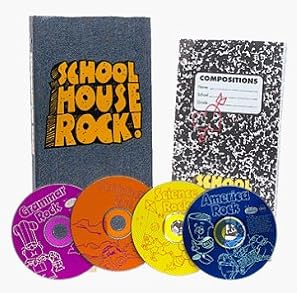
If we go back to our early days in school, when we were first taught English grammar we may remember hearing something about prepositions. Prepositions are those little words that typically point us to a location (yes, they can point to time and relationship too but bear with me). So when we first were learning to read we said that, "The cat is on the mat" or that we would not eat green eggs and ham "in a box or with a fox." (If you're still a bit rusty on prepositions be sure to review the classic episodes of School House Rock.)

Now if we are building a sentence to help us better understand what faith is we might say something like, "I (the subject) have (the verb) faith (the direct object) in (a preposition)..." What we need now is what our English teachers called "the object of a preposition."

You see, faith requires an object. You can't just have 'faith' by itself, that is unless you are talking about "the faith" as in "Keep the faith!" or you are talking about that girl whose name is Faith. Thanks to that little two-letter word "in" we know that there must be another noun (person, place or thing) that tells us where that faith is located.

We could say then that 'faith' is the trust that a person has in a certain object (something or someone) based on what they believe to be true about that object. For example, imagine you were about to board a flight at the airport when you notice that your pilot is yawning uncontrollably and is complaining to his co-workers about how he hasn't slept in days. Then you happen to notice out the window that someone appears to be patching up sections of the plane with duct tape. Would you take your seat? My guess is no, you would not deem this situation travel-worthy.

Now according to the Bible, both the Old and New Testaments (a claim that is worth verifying), the most worthy object of a person's faith is in God Himself and in His Son Jesus Christ. But that doesn't tell us much, does it? We might reply by asking, "Faith to do what? Why should I trust God? Why is Jesus worthy of faith?" Based on my definition of faith stated above we would have to somehow demonstrate that God and/or Jesus are worthy of faith by showing that we could trust them to do what they claim to be able to do for us because of what we believe to be true about them.

And that's what I hope to demonstrate next time. To be continued...

[This column was originally written for and published in the July 20, 2011 edition of the EV Star, North English, IA]

Enhanced by Zemanta

Tuesday, April 19, 2011

Feed the Sheep!

Sheep and goats

Image via Wikipedia

One of the books that I picked up recently is The Work of the Pastor by William Still. On the subject of preaching and teaching Still offers this advice to pastors:

It is to feed the sheep on such truth that men are called to churches and congregations, whatever they may think they are called to do. If you think that you are called to keep a largely worldly organisation, miscalled a church, going, with infinitesimal does of innocuous sub-Christian drugs or stimulants, then the only hope I can give you is to advise you to give up the hope of the ministry and go and be a street scavenger; a far healthier and more godly job, keeping the streets tidy, than cluttering the church with a lot of worldly claptrap in the delusion that you are doing a good job for God. The pastor is called to feed the sheep, even if the sheep do no want to be fed He is certainly not to become an entertainer of goats. Let goats entertain goats, and let them do it out in goatland. You will certainly not turn goats in to sheep by pandering to their goatishness. Do we really believe that the Word of God, by His Spirit, changes, as well as maddens men? If we do, to be evangelists and pastors, feeders of the sheep, we must be men of the Word of God. (p, 23, underlining mine)

Enhanced by Zemanta

Friday, April 15, 2011

Back from TCG11

I spent today catching up after an incredible week in Chicago at this year’s The Gospel Coalition conference. It will take a few days to fully recover, but it will be worth it. After attending the 2009 “Evangelical All-Star Game” I knew I had to go back. I wasn’t disappointed.

Sent from a Motorola phoneEverything about the event was incredible. The speakers were top notch, the music was outstanding, and the bookstore was nearly overwhelming. I was fortunate to be one of the minority who also got to be a part of this year’s Band of Bloggers event. IMG_3172

Eventually much of the conference content will make its way online. What you won’t get online however are the intangibles of a conference like this. I met pastors and leaders from all over the country. There were some of those “small-world” connections that inevitably happen in such larges crowds. It was encouraging to see the tell-tale lanyards on the train, in the restaurants, and even in the airport. I guess what I’m saying is that it was very encouraging to see so many people (many of who were “younger”) all on the same team.

I’ll be back in 2013. Make plans now to be there too. You’ll be glad you did.

Thursday, April 7, 2011

How Far is Too Far?

Angus Young, lead guitarist of the hard rock b...

Image via Wikipedia

How far is too far? It’s a good question. It’s also a question that makes all the difference depending on why a person is asking. It’s a question that James McDonald asked in The Elephant Room.

I came a little to the party so I missed the original broadcast. Thankfully Harvest Bible Chapel has been posting clips from the event on their vimeo site. The latest is a discussion between McDonald, Mark Driscol, and Perry Noble. The topic: Was it right for Noble to use AC/DC’s song Highway to Hell as a lead in to his sermon?

Highway to Hell - Part 1 from Harvest Bible Chapel on Vimeo.

After watching this clip I googled “Perry Noble Highway to Hell” and found the video of the music performance on YouTube.

NewSpring Band performs AC/DC's "Highway to Hell"


It turns out this is a bit of old news (where have I been?). This infamous sermon/rock show was a part of the Easter 2009 service. I did a bit of searching but wasn’t able to find the original audio or video aside.

Since this particular episode is old news I won’t focus on whether Noble was right or wrong in this case. The question I am more interested in is the one McDonald raised at the end of the video clip: how far is too far? What are the boundaries of acceptable methodology for reaching people for Jesus Christ? For some the question is about how much leash they can have before they needed to be pulled back. For others it is a hedge of protection, guarding against voiding the gospel message by our actions.

So I will pose the question: How far is too far when it comes to using our creativity to expand the reach of the gospel?

Enhanced by Zemanta

Wednesday, April 6, 2011

Knowing God–audiobook review

The first time that I read J.I. Packer’s Knowing God I was a first-year seminary student. The book was a required text for my systematic theology course. As I listened to this audiobook I was reminded of how I felt back then—this book doesn’t read like a textbook. But that’s what you have with Packer’s Knowing God, a top notch systematic theology work that is not only readable, but hard to put down (or in this case, hard to hit pause on the iPod).

While Packer doesn’t hit every subject under the heading of systematic theology, he does touch on a number of topics beyond the doctrine of God. Packer helps the reader (or listener) think through such subjects as God’s revelation through Scripture, the Trinity, the person and work of Jesus Christ, and soteriology (the doctrine of salvation).

When I read a book or listen to an audiobook I am always looking for that “worth-the-price-of-admission” factor. Not every book has it, but the best ones often do. For Knowing God it is Section Three, Chapter 18: The Heart of the Gospel. Packer tackles the the term propitiation, a word that can scare readers. But Packer not only unpacks the term, he explains the whole concept in such a way that provides the reader with a better sense of how atonement relates to the gospel. Chapter 18 is certainly worth the price of admission. (Apparently others felt the same way. The chapter was included in In My Place Condemned He Stood: Celebrating the Glory of the Atonement by Packer and Mark Dever.)

As an audiobook Knowing God is an easy listen. The length of the chapters lend themselves to be manageable track lengths. The narrator (Simon Vance) does a good job of giving a voice to Packer’s text, one that keeps the listener engaged.

[Disclosure of Material Connection: I received this book free from christianaudio.com as part of their christianaudio Reviewers Program. I was not required to write a positive review. The opinions I have expressed are my own.]

Enhanced by Zemanta

Saturday, March 26, 2011

Can’t wait for BoB

If you haven’t registered either for The Gospel Coalition 2011 Conference or the Band of Bloggers event, stop reading this and do it now. Did I mention there will be free books?

Monday, March 14, 2011

Kevin DeYoung reviews Love Wins by Rob Bell

I just finished reading Kevin DeYoung’s review of the now controversial, soon to be released book by Rob Bell, Love Wins. The review is long (available also as a 20 page PDF) but worth the time it takes to read. The review is not only helpful for understanding Bell’s theology of the afterlife, it also traces the book’s departure from orthodox Christology, eschatology, and as DeYoung suggests most egregiously from the doctrine of God.

“At the very heart of this controversy, and one of the reasons the blogosphere exploded over this book, is that we really do have two different Gods. The stakes are that high. If Bell is right, then historic orthodoxy is toxic and terrible. But if the traditional view of heaven and hell are right, Bell is blaspheming. I do not use the word lightly, just like Bell probably chose “toxic” quite deliberately. Both sides cannot be right. As much as some voices in evangelicalism will suggest that we should all get along and learn from each other and listen for the Spirit speaking in our midst, the fact is we have two irreconcilable views of God.”

DeYoung’s review is well written and without having read Bell’s book yet myself, appears to be very comprehensive. Yet what shines forth most clearly from this review is DeYoung’s grace and charity toward Bell the man and his passion for pointing God’s people toward a right understanding of Biblical truth.

“I have not spent hours and hours on this review because I am out to get another pastor. I may be a sinner, but with four young children and a very full church schedule, I have no time for personal vendettas. No, this is not about a single author or a single church. This is about the truth, about how the rightness or wrongness of our theology can do tremendous help or tremendous harm to the people of God.”

Take the time to read this review. Though DeYoung won’t be the last one to review Love Wins in the coming days, I imagine many bloggers, writers, and thinkers will be citing this helpful article.

Friday, March 11, 2011

Trust Me ;)

Rob Bell

Image by feyip via Flickr

I’m not one of the privileged few who have a pre-release copy of Rob Bell’s forthcoming book Love Wins. However, I have been reading and discussing with a local group of pastors Bell’s Jesus Wants to Save Christians. I couldn’t agree more with Carl Truman’s recent post critiquing the way Bell and others construct their arguments:

Popular books written for popular consumption are vital in the church; and Bell is to be commended for seeing that need. Further, when such books simply put forth an unexceptionable position, there is no real necessity for any scholarly apparatus; but when they self-consciously present themselves as arguing for significant or controversial paradigm shifts, the author really does need to cite sources. This is crucial because such citation allows the reader to engage in a conversation with the matter at hand. Indeed, the failure to do so actually prevents the reader from checking such for herself. In short, such an author does theology by fiat, adopting a dictatorial and high-handed approach which precludes constructive dialogue, whatever “conversational” rhetoric the author may use to describe his intentions. The message is not one of dialogue; it is rather ‘Trust me: everyone else is wrong, though I am not going to give you the means to judge their arguments for yourselves.’ That kind of approach lacks any real critical or dialogical integrity.

via JT

Enhanced by Zemanta

Wednesday, March 9, 2011

The Mark

Ashes imposed on the forehead of a Christian o...

Image via Wikipedia

Perhaps sometime today (Wednesday) you might see someone with a big, black, dirty smudge on their forehead. Lest you think they were running late and missed their morning shower or that they just wiped their brow after unloading a load of coal, know that smudge was put there on purpose.

Today many of our brothers and sisters in Christ in other denominations will be marking the beginning of Lent. Ash Wednesday has marked the start of this holy season for centuries. Traditionally Ash Wednesday and the Lenten season are celebrated in preparation for Easter.

I remember one day walking back from class on my college campus seeing a group of students just coming out of a church service (the denomination doesn't matter), bearing the mark of the black smudge. What troubled me was that I knew some of these same students and that what I knew of their lifestyle seemed inconsistent with such a mark of repentance. "What hypocrites!" I thought to myself.

The funny thing about hypocrisy, as the old saying goes, "It takes one to know one."

It may be the case that because of our tradition none of us reading these words will attend an Ash Wednesday service or will receive the mark of the cross on our foreheads. But how many of us will wear a cross necklace to work? How many have a silver fish or clever Christian bumper-sticker on the back of our car? Who will dust and straighten up the Christian artwork hanging the wall in their home? None of these are wrong, but do they accurately depict who we are? What are the distinguishing marks of a Christian believer?

Shortly after a meal with his disciples where Jesus identified Judas as his betrayer, the Master once again told the Twelve he would soon be leaving them. And so, Jesus issued a new commandment to his disciples:

"Love one another: just as I have loved you, you also are to love one another. By this all people will know that you are my disciples, if you have love for one another." (John 13:34-35, ESV)

Of all the things Jesus could have said about what will make his followers stand out from the rest of the world, Jesus picked love. Love seems to be one of the most generic human characteristics, and yet Jesus says it will be uniquely demonstrated in those who truly belong to him. What's so unique about "Christian" love? Jesus says the uniqueness will be seen in how we love one another.

It's not hard to love. Jesus said that even sinners are capable of loving others (Luke 6:32). But sinners typically only love the loveable. Sinners love if and only they are loved in return. What if God loved us this way? What if Jesus' sacrificial love was given only to those who were loveable? Scripture tells us that none of us are loveable and therefore none of us would ever know God's saving grace (Ps 130:3; Rom 3:10).

So what then is the distinguishing mark of a Christian? Christ-like love. Love that has nothing to do with favoritism or personal gain. How else could Jesus ever love Judas? How else could Jesus ever love you or me? This is love that says, "I put you first, not because you are good or loveable or even of benefit to me, but because I am Jesus' disciple" (Php 2:3)

Smudge or no smudge we know that tomorrow there will be people out there bearing the distinguishing mark of Jesus Christ. Will you be one of them? How will anyone know?

[This post was written for the Cornerstone EFC Around the Corner weekly newsletter for March 9, 2011]

Enhanced by Zemanta